
Key Takeaways
|
I&I sends excess groundwater and stormwater into sewer lines, overwhelming treatment plant capacity and driving up utility operating costs.
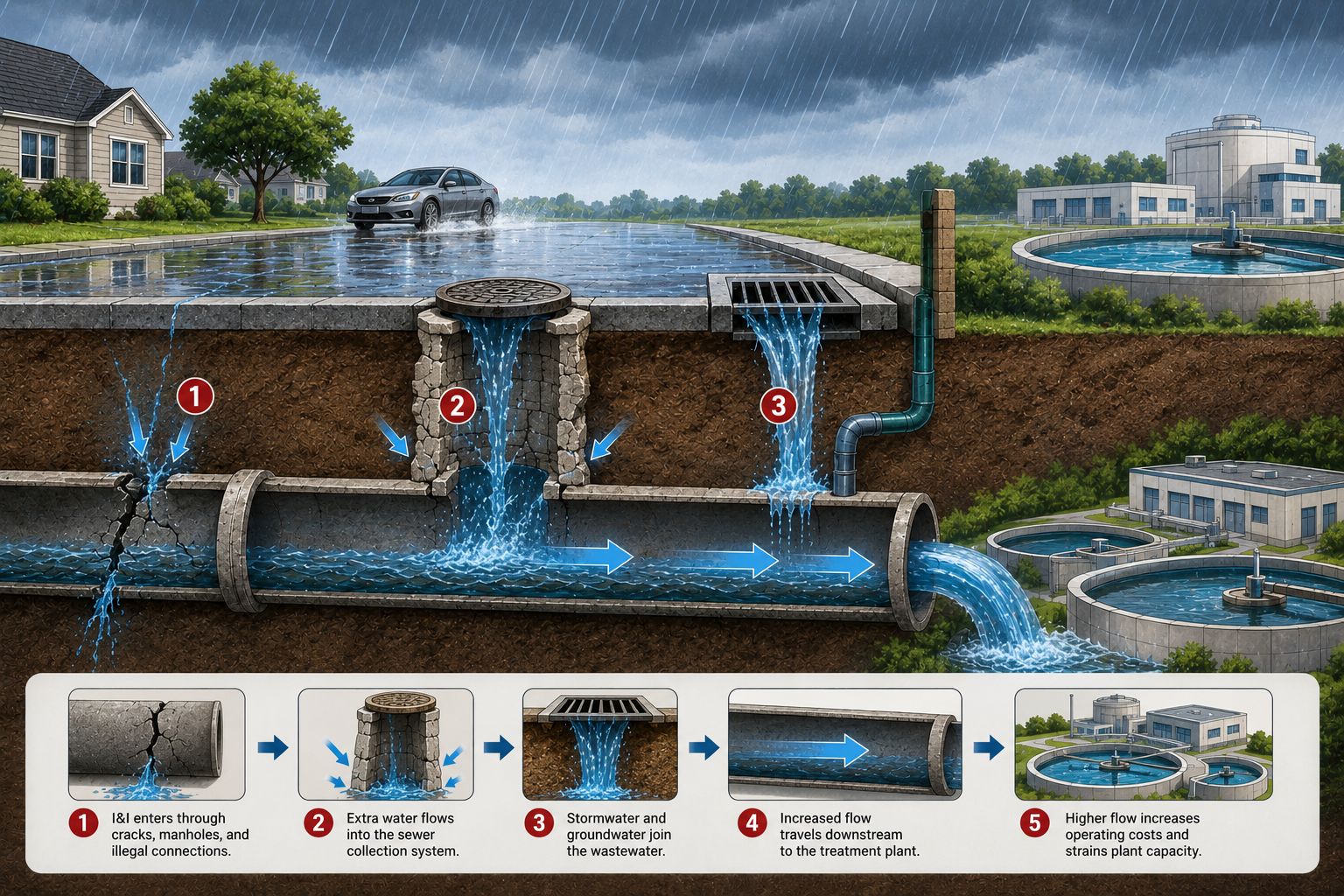
Every wastewater utility eventually runs into the same question: why does flow at the treatment plant spike so dramatically every time it rains, even though the number of homes and businesses on the system hasn’t changed? The answer, in most cases, is inflow and infiltration, or I&I, extra water never meant to be in the sanitary sewer system. It enters through cracked pipes, failing joints, illegal downspout connections, and aging manholes, then travels downstream to the treatment plant. The plant absorbs the consequences, but the fix belongs upstream, in the pipes, manholes, and lift stations of the collection system.
Understanding Inflow and Infiltration (I&I)
I&I is really two problems grouped under one term, since both show up the same way, as extra flow the system was never designed to carry.
What Counts as Inflow
Inflow enters the sewer system quickly, usually during or right after a storm, through sources like downspouts tied into a lateral, sump pumps discharging into a cleanout, or stormwater draining through a loose manhole cover. It spikes hard during a storm and disappears almost immediately.
What Counts as Infiltration
Infiltration is slower and less visible. Groundwater seeps in through cracked pipe walls, deteriorated joints, and root intrusion, especially in older clay or concrete pipe. It doesn’t need a storm at all, rising groundwater can push infiltration up for weeks after rain has passed, making it harder to diagnose without monitoring.
How Does I&I Affect a Wastewater Treatment Plant?
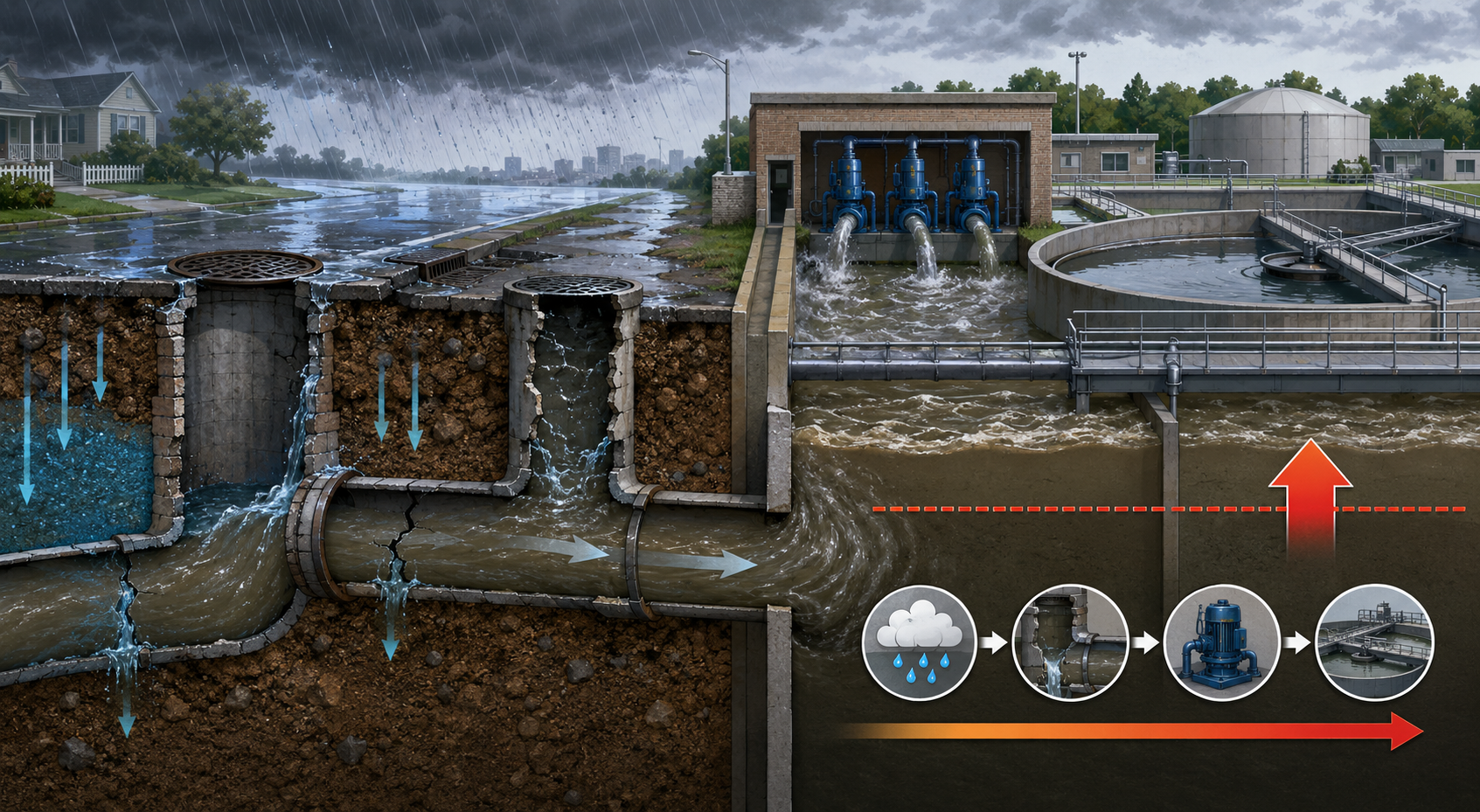
A treatment plant is built around a specific design capacity, based on the population it serves plus a safety margin, and I&I breaks that math. According to the U.S. EPA, many municipalities see wet-weather influent flows that exceed treatment capacity, largely from I&I entering the sanitary sewer system.
The plant absorbs that burden predictably: peak flows can approach or exceed rated capacity during storms, sustained high flows raise energy costs to treat water that never should have entered the system, and chronic I&I raises the risk of permit violations and overflows. None of this reflects a failure at the plant. It reflects a gap upstream, which is exactly where the fix needs to happen.
Why Does the Collection System Play a Critical Role in Protecting Treatment Plants?
The most effective way to protect a wastewater treatment plant is to reduce I&I before it reaches the facility. Because the problem usually starts within the collection system, identifying and repairing defects upstream helps utilities improve treatment plant performance while lowering long-term operating costs.
Most I&I Begins in the Collection System
Common sources of inflow and infiltration include:
- Cracked sewer mains
- Deteriorated manholes
- Defective pipe joints
- Aging service laterals
- Illegal stormwater connections
- High groundwater entering damaged infrastructure
These defects send millions of unnecessary gallons to a treatment plant each year.
Aging Infrastructure Increases I&I
Many municipal sewer systems have been in service for decades. As pipes, manholes, and joints deteriorate, they become more vulnerable to groundwater infiltration and stormwater inflow. Regular monitoring helps utilities identify these issues before they become larger operational problems.
Data Helps Utilities Make Smarter Decisions
Rather than relying solely on routine maintenance schedules, municipalities are increasingly using monitoring data to identify where I&I is occurring. A data-driven approach allows utilities to prioritize repairs, maximize maintenance budgets, and focus rehabilitation efforts where they will have the greatest impact.
What Are the Financial and Operational Impacts of I&I?
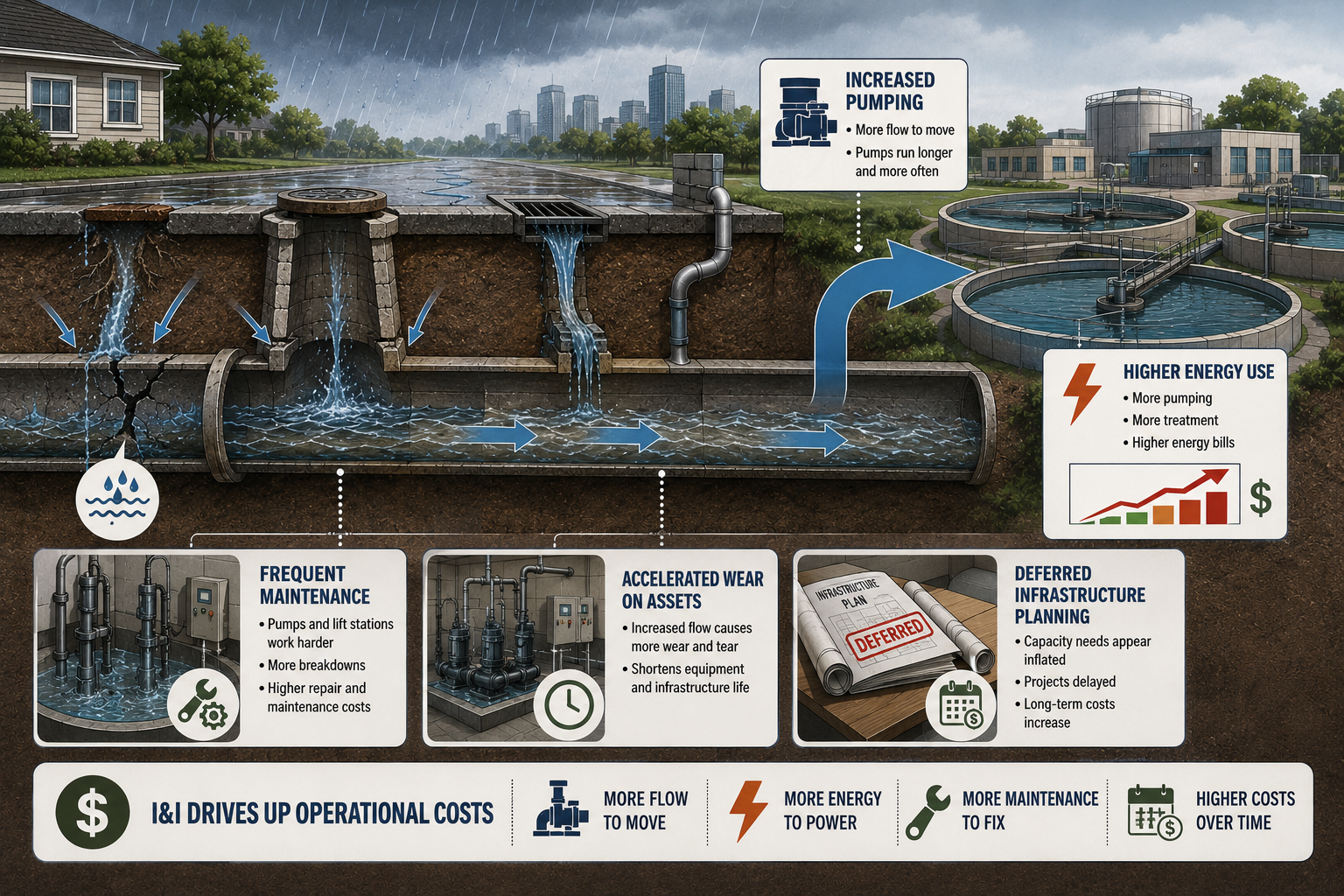
I&I affects more than treatment plant performance, it also increases the overall cost of operating and maintaining a wastewater collection system. Every unnecessary gallon entering the system requires additional resources to transport and process.
Higher Operating Costs
Excess flow increases expenses for pumping, energy, labor, equipment operation, and routine maintenance. Over time, these costs can place significant pressure on municipal budgets.
Increased Maintenance Requirements
Higher flow volumes cause pumps, lift stations, and other infrastructure to work harder than necessary. This leads to more frequent maintenance, additional repairs, and a shorter service life for critical assets.
More Difficult Capital Planning
Persistent I&I can make treatment plants appear to be reaching capacity sooner than expected. By locating and reducing I&I within the collection system, municipalities can make better-informed capital improvement decisions and maximize the use of existing infrastructure before investing in major expansions.
How Can Utilities Identify Sources of I&I Before They Reach the Treatment Plant?
Finding I&I accurately takes more than a visual inspection or one system-wide flow number. It takes tools built to separate where the water is coming from, and how much is inflow versus infiltration.
Sensor-Based Flow Monitoring
Sensor-based flow monitoring platforms, like sewer basin monitoring networks such as BASINiQ, place monitoring points across a collection system to isolate which sub-basins contribute the most excess flow, letting a utility prioritize repairs that actually reduce flow at the plant, instead of guessing.
Acoustic Assessment for Prioritizing Cleaning
Acoustic inspection tools, such as SL-RAT technology, assess pipe condition quickly by listening for sound changes that indicate blockages, giving crews a fast way to prioritize which pipe segments need cleaning first.
How Can Proactive I&I Management Improve Wastewater System Performance?
Getting ahead of I&I changes the cost equation for a utility. Instead of reacting to a capacity crisis, a utility with a proactive program can plan repairs around real data and spend maintenance dollars on the segments actually driving the problem. Digital modeling tools that create a virtual representation of manhole and pipe condition, sometimes called digital twins, show utilities where infrastructure is deteriorating before it becomes a visible failure, so rehabilitation dollars go toward the worst assets first.
Utilities that combine flow monitoring, acoustic assessment, and digital condition modeling typically see less spending on emergency response and more on targeted repairs that reduce I&I at the source.
Protect Your Wastewater Treatment Plant by Addressing I&I at the Source
I&I is a treatment plant problem in the sense that the plant absorbs the extra flow, cost, and risk. But it’s a collection system problem in every sense that matters, where it starts, where it can be found, and where it can be fixed. Utilities that treat it as an upstream issue consistently spend less and avoid more regulatory risk than utilities that wait for the next storm to force the issue.
RH Borden and Company LLC is a trusted wastewater technology provider based in Lehi, Utah, serving municipalities across the United States with advanced, data-driven sewer system maintenance solutions. We specialize in helping cities transition from traditional, labor-intensive maintenance to smarter, technology-enabled infrastructure management.
At RH Borden, we deliver innovative wastewater solutions including Acoustic Assessments using SL-RAT technology to quickly identify cleaning priorities, BASINiQ sensor networks for detecting inflow and infiltration (I&I) sources across sewer basins, and Manhole Virtual Models (MVM) that create digital twins of infrastructure assets to assess condition and guide rehabilitation decisions. Our solutions are designed to improve efficiency, reduce unnecessary maintenance costs, and extend the life of wastewater infrastructure through accurate, actionable data-driven insights.
Contact us today at 385-510-3223 or visit rhborden.com to learn how we can help protect your treatment plant by managing I&I at the source.

Frequently Asked Questions
How can our utility tell if I&I is increasing wastewater treatment costs?
Look for wet-weather flow spikes that exceed dry-weather baseline flow relative to your service population, then confirm with sub-basin monitoring.
Can reducing I&I delay the need to expand a wastewater treatment plant?
Yes, removing excess I&I volume frees up existing capacity and can delay or eliminate a costly expansion.
What parts of a collection system are most likely to contribute to I&I?
Aging pipe joints, cracked pipe walls, deteriorated manholes, and improper connections like downspouts or sump pumps.
What technologies can utilities use to locate I&I more accurately?
Sensor-based flow monitoring, acoustic pipe assessment, and digital condition modeling together give a far more targeted picture than visual inspection alone.
Why is proactive I&I monitoring more effective than responding to wet-weather issues?
It finds problem areas before they cause a crisis, letting utilities plan repairs instead of paying a premium for emergency response.